

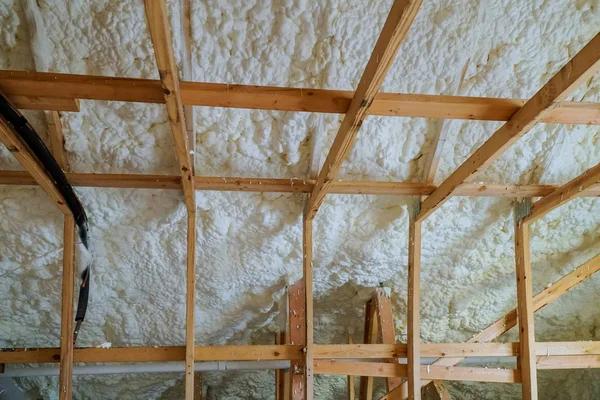
Noise reduction spray foam insulation has become an increasingly popular solution for those seeking effective soundproofing in residential and commercial spaces. Unlike traditional insulation materials, spray foam offers unique advantages in controlling and minimizing noise transmission through walls, ceilings, and floors. This innovative material expands upon application, filling gaps and crevices that other insulations might miss, thereby creating a continuous barrier that significantly reduces sound penetration.
One of the primary benefits of noise reduction spray foam insulation is its ability to absorb sound waves. The closed-cell structure of the foam traps and dampens airborne noises such as voices, music, and traffic sounds. This sound absorption helps to create quieter indoor environments by preventing exterior noises from entering and reducing the transmission of sounds between rooms. Unlike fiberglass or cellulose insulation, which primarily slows down sound, spray foam actively diminishes sound energy, resulting in a more noticeable improvement in acoustic comfort.
Another advantage is the foam’s sealing capability. Spray foam insulation expands rapidly upon application, conforming to the shape of the cavity and sealing cracks, gaps, and joints. This airtight seal is crucial in soundproofing because even small openings can allow sound to travel through. By eliminating these gaps, spray foam reduces sound leaks that commonly occur around electrical outlets, plumbing penetrations, and structural joints. This comprehensive sealing improves overall sound isolation and enhances energy efficiency by preventing air infiltration.
Additionally, spray foam’s density contributes to its soundproofing performance. Denser materials generally provide better sound insulation as they resist the passage of sound vibrations. Spray foam insulation offers a higher density compared to traditional batt insulation, making it more effective at blocking both high and low-frequency sounds. This quality makes it suitable for a variety of applications, from reducing noise in home theaters and bedrooms to enhancing privacy in offices and commercial buildings.
Moreover, spray foam insulation is durable and resistant to moisture, mold, and pests, ensuring that its soundproofing properties remain intact over time. Unlike some other materials that may degrade or settle, spray foam maintains its form and effectiveness, providing long-term sound control. Its versatility allows it to be applied in new construction as well as retrofit projects, making it a practical choice for improving sound insulation in existing structures.
In summary, noise reduction spray foam insulation offers superior soundproofing benefits through its sound absorption, airtight sealing, density, and durability. Its ability to create a continuous, impermeable barrier against noise makes it an excellent investment for anyone looking to enhance acoustic comfort and privacy in their spaces.